
Moving in together is exciting, but it also creates practical money questions that many couples do not settle until there is tension. Who owns the furniture? What happens if one partner pays more of the mortgage? Should a business, inheritance, or condo owned before the relationship stay separate?
A cohabitation agreement checklist in Canada helps you answer those questions before they become a dispute. It is especially useful for common-law partners, couples buying property together, and partners who are not ready for marriage but still want a clear plan.
Common-law relationships are not a niche issue. Statistics Canada reported that 23% of Canadian couples lived common law in 2021, the highest share in the G7. The legal rules still vary sharply by province, so a checklist should do two things: organize your facts and flag the issues your lawyer should review.
This guide is for Canadian couples who want a practical starting point before creating a cohabitation agreement template or sending a draft to a lawyer.
Quick Answer: What Should a Cohabitation Agreement Include?
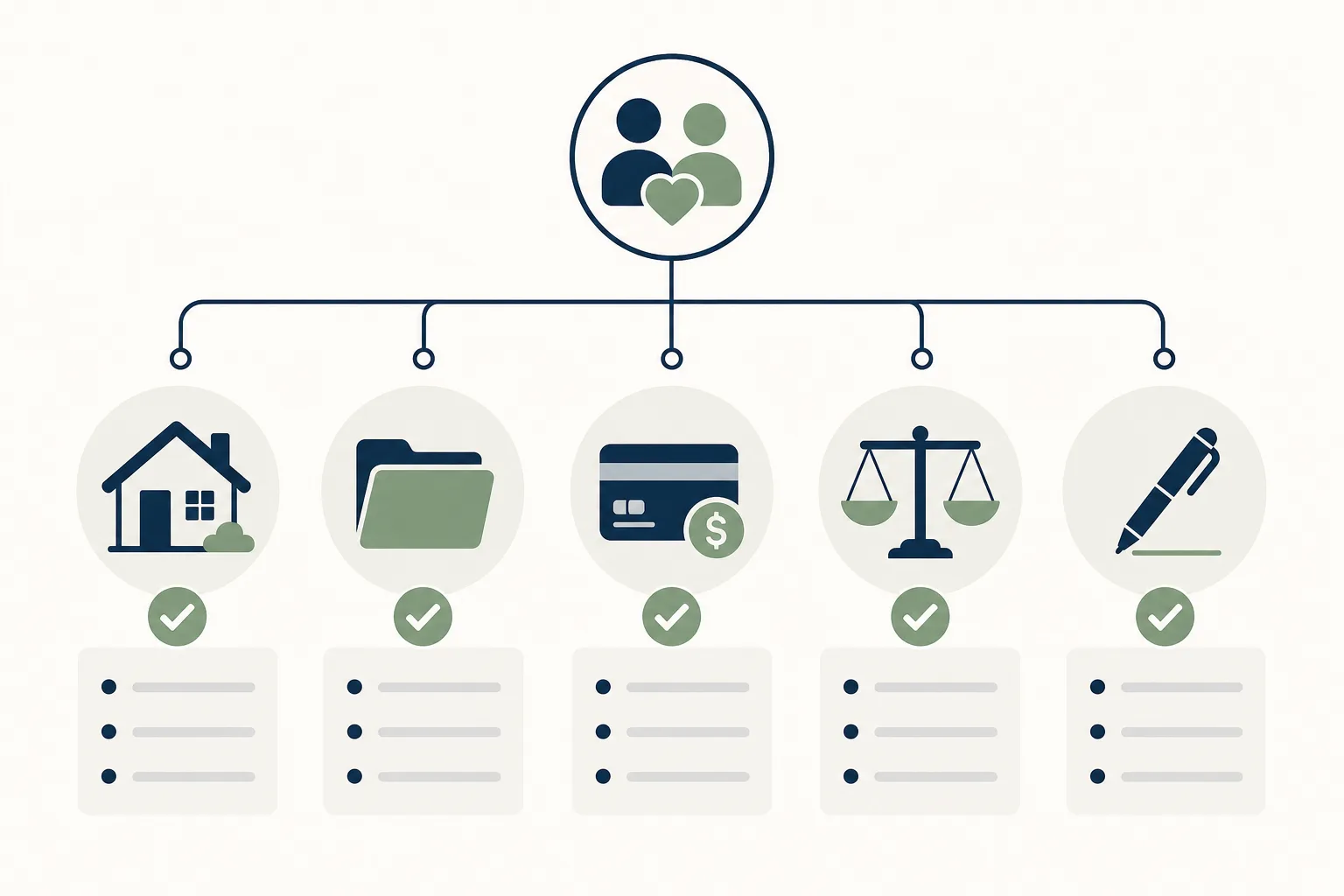
A Canadian cohabitation agreement usually covers:
- Each partner's name, province, relationship status, and cohabitation date
- Property each partner owns before moving in together
- How jointly owned property will be handled
- Rent, mortgage payments, utilities, repairs, and household expenses
- Debts, credit cards, student loans, tax debts, and personal guarantees
- Business interests, investments, inheritances, and gifts
- What happens if the relationship ends
- Whether either partner may seek support, subject to provincial law and court review
- Pets, vehicles, furniture, and other shared items
- Estate planning reminders, since a cohabitation agreement does not replace a will
- Independent legal advice, disclosure, signatures, and witnessing
The goal is not to make the relationship feel transactional. The goal is to create a written record while both people are calm and cooperative.
1. Relationship and Home Details
Start with the basics. A lawyer needs to know who the agreement is for, where the couple lives, and which provincial law may apply.
Include:
- Full legal names
- Current addresses
- Province or territory of residence
- Date you started living together, or expected move-in date
- Whether either partner is still legally married to someone else
- Whether you plan to marry later
- Whether you have children together, children from earlier relationships, or plans for children
These facts matter because common-law status is not identical across Canada. The tax definition of common-law, the family law definition of spouse, and the property division rules may not all use the same test. Your agreement should be built around the family law rules in your province, not a general internet definition.
If marriage is likely, add a review trigger. Many couples decide that the cohabitation agreement should be reviewed and converted into a marriage contract or prenup before the wedding. Our guide to prenups vs cohabitation agreements in Canada explains that handoff in more detail.
2. Property Each Partner Brings Into the Relationship
List what each person already owns before cohabitation begins. This is one of the most important parts of the checklist because it creates a clean starting point.
Common examples include:
- Bank accounts
- RRSPs, TFSAs, pensions, and investment accounts
- A home, condo, cottage, or rental property
- Vehicles
- Furniture and household items
- Cryptocurrency or other digital assets
- Business shares or professional practice interests
- Valuable personal property, such as jewelry, art, or collections
Do not only write "Partner A keeps their property." Attach or reference a schedule that identifies the property and, where practical, its approximate value on the date the agreement is signed. Screenshots, statements, appraisals, title documents, and account summaries can help your lawyer test whether disclosure is clear enough.
This is also where couples should separate ownership from use. One partner might own the condo, while both partners live there and share monthly costs. The agreement should explain whether payments toward mortgage, utilities, renovations, or repairs create any claim to equity.
3. The Shared Home: Rent, Mortgage, Title, and Exit Plan
The home is usually the largest emotional and financial issue. Your checklist should be precise about the type of home arrangement you have.
If you rent together, address:
- Who is on the lease
- How rent, tenant insurance, utilities, and deposits are split
- What happens if one partner moves out
- Who is responsible for lease-breaking costs
- How shared furniture and household items will be divided
If one partner owns the home, address:
- Whether the non-owner contributes to mortgage, taxes, condo fees, repairs, or renovations
- Whether those contributions are treated as rent, shared expenses, loans, or equity-building payments
- Whether the non-owner gets notice before being asked to leave after separation
- Whether either partner can claim reimbursement for major improvements
If you buy together, address:
- Ownership percentage on title
- Down payment contributions
- Mortgage responsibility
- What happens if one partner wants to sell and the other does not
- Buyout formula, appraisal method, and timelines
- Responsibility for closing costs, penalties, and realtor fees
Couples buying property should also read our guide on protecting a shared property investment. A cohabitation agreement can work alongside title documents and mortgage paperwork, but it should not contradict them.
4. Monthly Expenses and Day-to-Day Money
A good cohabitation agreement does not need to micromanage every grocery run. It should, however, set expectations for recurring expenses.
Consider documenting:
- Rent or mortgage contribution
- Utilities, internet, phone, and insurance
- Groceries and household supplies
- Car payments, fuel, repairs, parking, and transit
- Child-related expenses, if relevant
- Pet expenses
- Travel, subscriptions, and discretionary spending
- Contributions to a joint account
- What happens if one partner loses income
Some couples split expenses 50/50. Others use a percentage based on income. Either approach can work if both partners understand it and the agreement is realistic.
Also decide whether you will keep separate bank accounts, use one joint account for household expenses, or combine both approaches. If you use a joint credit card, say who is responsible for payment and how disputes will be handled.
5. Debts, Loans, and Credit Risk
Debt is often more urgent than property because one partner's financial risk can affect the household quickly.
List:
- Student loans
- Credit cards
- Lines of credit
- Car loans
- Tax debt
- Business debts
- Personal guarantees
- Debts owed to family members
- Any debt secured against a home
The agreement should say whether debts remain separate, whether new household debts are shared, and what happens if one partner pays the other's debt. If a parent lends money for a down payment, document whether it is a gift, a loan to one partner, or a loan to both partners.
Be careful with informal promises. If both partners sign a mortgage, line of credit, or lease, a private agreement between them may not stop a lender or landlord from pursuing either signer. Your lawyer can explain the difference between obligations to each other and obligations to third parties.
6. Business Interests, Inheritance, and Gifts
Business owners and partners expecting family wealth should be especially careful. A cohabitation agreement can set expectations before the relationship changes the value, income, or management of an asset.
For business interests, consider:
- Whether the business remains separate property
- Whether future growth in value is shared or excluded
- Whether one partner will work in the business
- Whether unpaid labour, bookkeeping, marketing, or family support creates a reimbursement claim
- Whether business income used for household expenses changes anything
- How valuation would work if separation happens
For inheritance and gifts, consider:
- Whether inheritances stay separate
- Whether income generated by inherited funds is separate or shared
- Whether inherited money used for a home down payment remains traceable
- Whether gifts from parents are personal or joint
- What records each partner should keep
This does not replace tax, estate, or corporate advice. It simply helps your family lawyer identify terms that should be coordinated with the rest of your planning.
7. Support, Children, Pets, and Estate Planning
Support terms need careful legal review. In many provinces, common-law partners can have support rights after a certain period of cohabitation or after having a child together. The agreement can record intentions, but courts may still review support provisions in some circumstances.
Children are different. A cohabitation agreement cannot override a child's right to support, and parenting arrangements must be assessed based on the child's best interests at the relevant time. If you have children or plan to have children, your lawyer should review any child-related wording carefully.
Pets are worth addressing because many couples care deeply about them and the law may not treat them like children. Consider who keeps the pet, who pays vet costs, and whether there will be any shared care arrangement.
Estate planning deserves its own reminder. A cohabitation agreement can say what happens during separation, but it does not replace:
- A will
- Beneficiary designations
- Powers of attorney or personal directives
- Life insurance planning
- Estate tax and probate planning
Quebec's official cohabitation agreement guidance says a cohabitation agreement does not replace a will or mandate in anticipation of incapacity. That is a useful reminder for couples in every province.
8. Province-Specific Issues to Flag
Your checklist should include a province review. The same couple can get a different legal answer depending on where they live.
| Province | Checklist issue to flag |
|---|---|
| Ontario | Common-law partners do not have the same automatic property equalization regime as married spouses. Ontario's property division guidance explains that different rules apply when a marriage or common-law relationship ends. See the Ontario government property division page and our Ontario cohabitation agreement guide. |
| British Columbia | BC says property division rules apply to unmarried couples who have lived together in a marriage-like relationship for at least two years. The BC government common-law property page is a useful starting point. |
| Alberta | Alberta's Family Property Act allows adult interdependent partners to make property division claims, subject to timelines and rules. The Alberta government page on unmarried partner property division notes that partners may need legal advice about opting out. |
| Quebec | Quebec uses the language of de facto spouses. The Quebec government says spouses can use a cohabitation agreement and include an inventory of personal property and debts. Since June 30, 2025, Quebec also has a parental union regime for certain de facto spouses with children. See Quebec's cohabitation agreement page and Quebec's parental union page. |
This table is not a substitute for legal advice. It is a prompt list for your lawyer. If you have moved provinces, own property in another province, or split time between provinces, tell your lawyer before signing.

9. Documents to Gather Before Lawyer Review
You do not need a perfect binder before starting, but you should gather enough information to make the draft accurate.
Useful documents include:
- Government ID for legal names
- Lease, mortgage, title, or property tax records
- Bank and investment account summaries
- Pension or RRSP statements
- Credit card and loan statements
- Business ownership documents
- Recent tax notices of assessment
- Vehicle ownership records
- Insurance policies
- Appraisals for valuable property
- Records of family gifts or loans
- Existing wills, powers of attorney, or beneficiary designations
Keep copies of what you disclosed. If the agreement is ever challenged, clear disclosure and a fair process can matter as much as the wording.
10. Process Checklist Before Signing
The signing process should be calm, unpressured, and documented.
Before signing, aim for:
- Early conversation, ideally before or soon after moving in
- Honest financial disclosure by both partners
- A draft that reflects your actual province and assets
- Enough time for both people to review and ask questions
- Separate independent legal advice, especially for significant property, support, or business terms
- Proper signatures, witnesses, and storage of the final copy
- A review date after major life changes
Do not leave this until the week before a home closing, childbirth, wedding, or major financial transaction. Pressure can make an agreement easier to criticize later.
If cost is the concern, read our guide to cohabitation agreement cost in Canada. Many couples use an online drafting tool to organize the first version, then pay a lawyer to review a clearer, more complete draft.
How Prenuply Fits Into the Checklist
Prenuply helps couples turn their facts into a customized cohabitation agreement template for lawyer review. You answer guided questions about your relationship, province, property, debts, home, business interests, and preferences. Prenuply then creates a draft you can review with independent lawyers.
That matters because a blank template can miss the context that makes an agreement useful. A good draft should reflect whether you rent, own, plan to buy, have children, run a business, expect inheritance, or live in a province with special rules.
You can start a cohabitation agreement template when you are ready to organize your information.
Frequently Asked Questions
Is a cohabitation agreement the same as a prenup?
No. A cohabitation agreement is for partners who live together and are not married. A prenup, often called a marriage contract in some provinces, is for people planning to marry or already married. Some couples start with a cohabitation agreement and later review it before marriage.
When should we sign a cohabitation agreement?
Ideally, before moving in together or before making a major shared purchase. If you already live together, you can still create one. The key is to avoid pressure, disclose finances honestly, and get proper legal review.
Can a cohabitation agreement cover chores or household expectations?
It can record practical expectations, but the most important legally relevant terms usually involve property, debt, support, shared expenses, and what happens on separation. Keep lifestyle terms realistic and avoid turning the agreement into a daily rulebook.
Do common-law partners automatically split property 50/50 in Canada?
Not everywhere, and not always. BC, Alberta, Ontario, Quebec, and other provinces have different rules. That is why a province-specific review is essential before you rely on a draft.
Do both partners need separate lawyers?
Separate legal advice is strongly recommended, especially where the agreement deals with property, support, business assets, unequal bargaining power, or significant rights. In some situations, skipping independent advice can create risk if the agreement is later challenged.
Final Checklist
Before you sign, make sure your draft answers these questions:
- What does each partner own today?
- What debts does each partner bring in?
- How will rent, mortgage, bills, repairs, and household expenses be handled?
- What happens to a home if one partner owns it, or if both buy together?
- Are business interests, inheritances, and gifts separate or shared?
- Could support be an issue under your provincial law?
- What happens to pets, vehicles, furniture, and joint accounts?
- Does the agreement need to be reviewed if you marry, have a child, buy a home, move provinces, or start a business?
- Did both partners disclose finances and have time to review?
- Will each partner get independent legal advice before signing?
The best cohabitation agreement is not the longest one. It is the one that clearly reflects your real life, your province, and the choices both partners understand.
This article provides general information about cohabitation agreement planning in Canada. It is not legal advice. Prenuply AI Inc. is not a law firm and does not provide legal services. For advice about your specific situation, consult a qualified family lawyer in your province.