
If you are moving in with a partner in Ontario, a cohabitation agreement can turn vague financial expectations into written rules. That matters because common-law partners in Ontario do not automatically get the same property rights as married spouses. Who owns the home, whose name is on the lease, how you pay shared expenses, and what happens if one partner contributes more can all matter if the relationship ends.
This guide explains what an Ontario cohabitation agreement can cover, where common-law property rules are different from marriage, when a prenup may become relevant later, and what to organize before lawyer review.
What is a cohabitation agreement in Ontario?
A cohabitation agreement is a written domestic contract for two people who are living together, or plan to live together, and are not married to each other. Ontario's Family Law Act says cohabiting partners can agree on rights and obligations during cohabitation, when cohabitation ends, or on death. The law specifically lists property, support, and certain child education or moral training issues, but not decision-making responsibility or parenting time.
In plain language, a cohabitation agreement can answer questions like:
- Who owns property brought into the relationship.
- How jointly purchased property will be divided.
- How rent, mortgage payments, taxes, repairs, and household expenses are handled.
- Whether one partner will reimburse the other for a down payment, renovation, or debt payment.
- How spousal support will be approached if the relationship ends.
- What should happen if the couple later gets married.
Steps to Justice describes a cohabitation agreement as a written document that common-law partners can make before or while living together. It can say how they will deal with issues during the relationship or at the end of it, including property and debts.
Why Ontario common-law couples should not assume marriage-style property rights
Ontario property division is one of the main reasons couples search for a cohabitation agreement. Married spouses have equalization rules under Ontario family law. Common-law partners usually do not share property value just because they lived together.
Community Legal Education Ontario explains that when a common-law couple separates, each partner generally keeps property they own. Property bought together is usually shared only if both partners own it together. A partner may try to make an unjust enrichment claim in some situations, but that can be difficult, fact-specific, and expensive to prove.
That difference creates risk for both partners. The partner who owns more may worry about future claims. The partner who contributes to a home, renovation, business, or family expenses may worry that their contribution will not be recognized. A cohabitation agreement can reduce that uncertainty by recording what both people intended before conflict exists.
The home is often the biggest issue
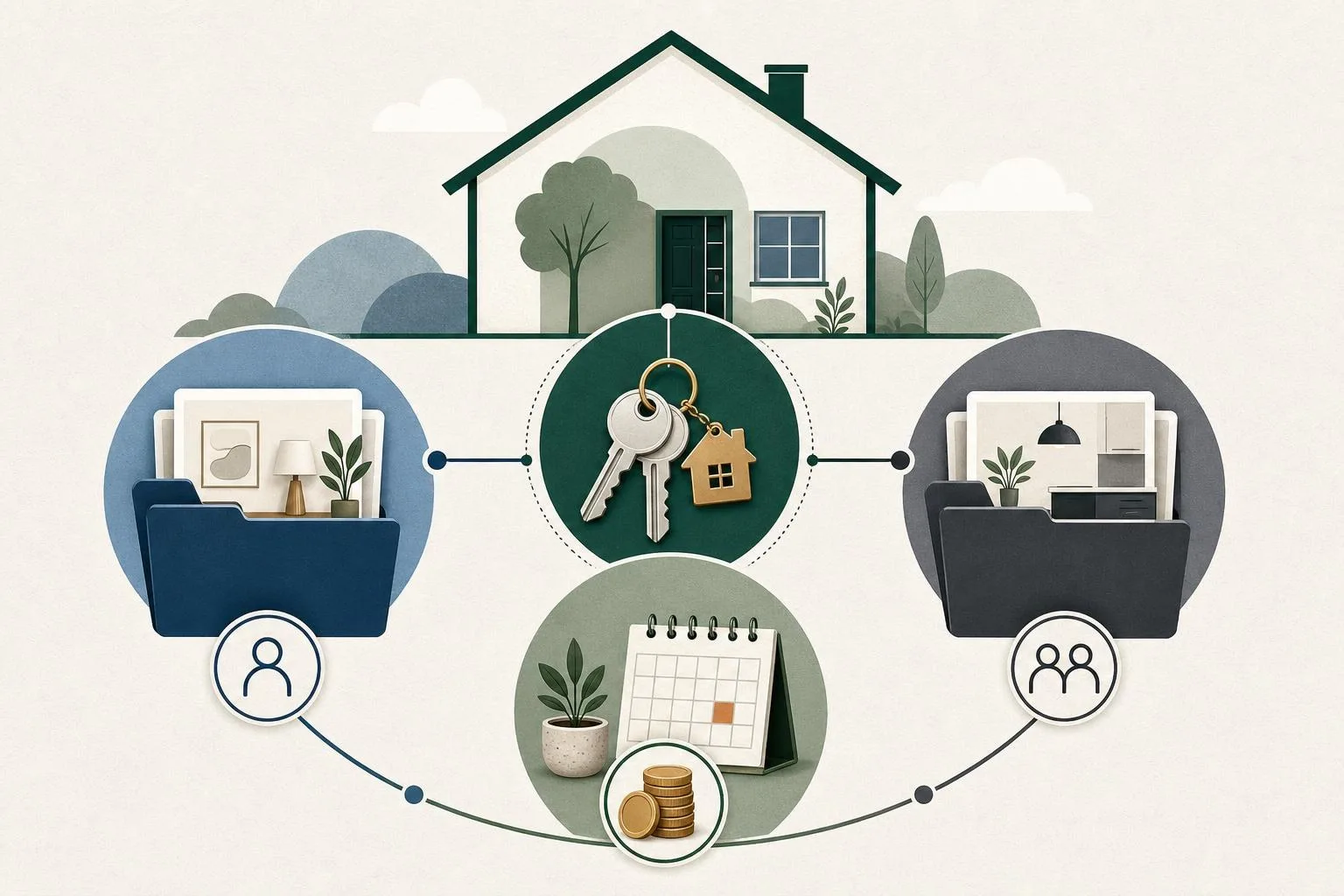
For common-law couples in Ontario, the family home is not treated the same way as a matrimonial home for married spouses. CLEO notes that a common-law partner does not automatically have the right to stay in the family home if it is not in their name. If one common-law partner owns the home, they may be able to sell or mortgage it without the other partner's permission.
This does not mean a cohabitation agreement can solve every housing issue by itself. Title, lease terms, mortgage documents, trust claims, and future marriage can all affect the analysis. But an agreement can help set practical rules such as:
- Whether a non-owner partner is making rent-like payments or building an agreed reimbursement right.
- How mortgage principal, interest, taxes, insurance, condo fees, and repairs are handled.
- What happens if one partner pays for renovations.
- Whether a partner has time to move out after separation.
- How jointly owned property is listed, sold, bought out, or refinanced.
If you later marry, special matrimonial home rules may apply. Steps to Justice notes that a cohabitation agreement automatically becomes a marriage contract if the partners marry, but also warns that some home-related terms may not apply after marriage because married spouses have equal rights to live in the matrimonial home. If marriage is likely, review the agreement before the wedding. Prenuply's Ontario prenuptial agreement guide is a useful next read for that stage.
Spousal support is different from property division
Property division and support are separate issues. A person can have no automatic share of a partner's property but still have a possible support claim if the legal test is met.
For support purposes, Ontario's Family Law Act includes two people who are not married if they have cohabited continuously for at least three years, or if they are in a relationship of some permanence and are parents of a child. That does not mean support is automatic. It means the person may qualify to ask for support, and amount and duration depend on the facts.
A cohabitation agreement can address support expectations, including whether support is waived, limited, reviewed later, or tied to certain events. This is an area where independent legal advice matters. Courts can look closely at support clauses, especially if one partner did not understand the consequences, there was not enough disclosure, or the result is unfair in the circumstances.
When an Ontario cohabitation agreement is worth considering
Not every couple needs the same level of planning. The case for an agreement is stronger when one or more of these facts apply:
- One partner owns a home, condo, cottage, business, or investment account before moving in.
- One partner is paying the down payment while both partners will live in the home.
- You are buying property together but contributing unequal amounts.
- One partner has significant student loans, tax debt, business debt, or family obligations.
- One partner may reduce work hours, move cities, or take on caregiving responsibilities.
- You want to protect an inheritance, family gift, trust interest, or family business.
- Either partner has children from a previous relationship.
- You may get married later and want a clear starting point for a marriage contract.
Couples who are planning to marry soon should also compare a cohabitation agreement with a prenup. Prenuply's prenup vs cohabitation agreement guide explains the difference across Canada, and the cohabitation agreement Canada guide gives broader national context.
A practical moving-in checklist
Before drafting, gather the facts. A strong agreement depends on clear information, not generic promises.

1. List what each partner already owns
Include real estate, bank accounts, investments, pensions, vehicles, businesses, cryptocurrency, valuable collections, and expected inheritance or family gifts. Note approximate values, account ownership, and whether either partner has supporting documents.
2. List debts and guarantees
Include credit cards, lines of credit, student loans, tax debts, business loans, personal guarantees, car loans, and mortgages. Also decide how future joint debt will be approved.
3. Write down the housing arrangement
Record who is on title or lease, who pays what, how repairs are handled, and whether payments create ownership rights, reimbursement rights, or no ownership rights. If you are buying together, decide what happens on sale, buyout, default, refinancing, and separation.
4. Decide how household expenses are split
Couples often split expenses 50/50, by income, or by category. Your agreement can state the approach and how often it should be revisited.
5. Address support carefully
Support clauses need careful drafting and lawyer review. Decide whether the agreement should waive support, preserve support, set review triggers, or handle only short-term transition payments.
6. Coordinate wills and beneficiaries
A cohabitation agreement is not a will. CLEO explains that common-law partners in Ontario do not automatically inherit from each other if there is no valid will. If you want your partner to inherit, coordinate your will, beneficiary designations, joint ownership choices, and insurance planning with proper advice.
7. Plan for future marriage
If marriage is possible, decide whether the same terms should continue, whether a lawyer should review the agreement before the wedding, and how matrimonial home issues should be handled. Ontario law says a cohabitation agreement becomes a marriage contract if the partners marry, so this point should not be left vague.
What makes the agreement easier to rely on later?
Ontario's Family Law Act says a domestic contract is unenforceable unless it is in writing, signed by the parties, and witnessed. Those are basic formalities, not the whole risk picture.
The Act also says a court may set aside a domestic contract or a provision in it if a party failed to disclose significant assets, debts, or liabilities, if a party did not understand the nature or consequences of the contract, or otherwise under contract law.
For a stronger process, couples usually should:
- Exchange meaningful financial disclosure before signing.
- Avoid signing under pressure, threat, surprise, or right before a major life event.
- Use clear language that both partners understand.
- Give each partner time to review the agreement.
- Have separate lawyers provide independent legal advice.
- Keep signed copies, disclosure schedules, and lawyer certificates together.
Steps to Justice and CLEO both emphasize getting legal advice before signing. You and your partner should not use the same lawyer for independent legal advice.
Can you start online and still use a lawyer?
Yes. Many couples use an online tool to organize the first draft, clarify the issues, and reduce the amount of blank-page drafting work before legal review. That can be useful when the couple already agrees on the broad deal but needs structure.
An online cohabitation agreement should not replace legal advice where the stakes are high. Lawyer review is especially important if the agreement deals with a home, support waiver, business, inheritance, children from a previous relationship, large asset gap, immigration concern, estate planning, or a partner who may be financially vulnerable.
Prenuply can help you create a structured cohabitation agreement template for lawyer review. You can start a cohabitation agreement draft and bring the organized draft, financial details, and questions to independent lawyers before signing.
FAQ
Does Ontario have common-law marriage?
People use the phrase common-law marriage, but living together does not make you legally married in Ontario. Common-law partners can have rights in specific areas, such as support if the legal threshold is met, but property and home rights are different from marriage.
Can a cohabitation agreement protect a house one partner already owns?
It can help clarify ownership, payments, reimbursement, renovations, occupancy, and sale or buyout expectations. It cannot change every rule that might apply later, especially if the couple marries and matrimonial home rights become relevant. Get Ontario family law advice before signing.
Do we need a lawyer for an Ontario cohabitation agreement?
Ontario law does not say a lawyer must draft the agreement. But legal advice is strongly recommended, and each partner should use a different lawyer. Independent legal advice helps show that each person understood what they were signing.
Can we sign after we already live together?
Yes. A cohabitation agreement can be made before or while you are living together. Earlier is usually better because it is easier to discuss expectations before a dispute exists.
What if we later get married?
Ontario's Family Law Act says a cohabitation agreement becomes a marriage contract if the partners marry each other. Review it before marriage because some terms may need updating, especially home, support, disclosure, and estate planning terms.
Sources checked
This article was prepared using current Ontario and public legal information sources checked on June 18, 2026, including the Ontario Family Law Act, Steps to Justice on cohabitation agreements and married vs common-law rights, CLEO's property division for common-law couples, and Ontario's public page on dividing property when a marriage or common-law relationship ends.
Prenuply AI Inc. is a technology company, not a law firm. Prenuply does not provide legal services or legal advice. A cohabitation agreement generated with Prenuply is a template for review with independent legal professionals.