
Yes, you can write your own prenup in some parts of Canada. That does not mean a lawyer-free document will reliably do what you expect.
The rules are provincial. Ontario and British Columbia legislation does not say that a lawyer must draft every marriage agreement, but each province has signing rules and grounds on which a court may set an agreement aside. Alberta has specific separate-lawyer acknowledgement requirements for property agreements. In Quebec, a marriage contract must be completed by notarial act.
The practical middle ground for many couples is to organize the terms and create a first draft online, then have each partner get independent legal advice before signing.
This article is general legal information, not legal advice. A family lawyer or Quebec notary can advise you about your circumstances.
Quick answer: can you make your own prenup in Canada?
It depends on what you mean by “make your own.”
| Approach | What you do | Main trade-off |
|---|---|---|
| Write from scratch | You research, draft, disclose finances, and arrange signing yourselves | Lowest upfront cost, highest risk of missing province-specific rules or unclear terms |
| Use a generic template | You fill in a downloaded form | Faster, but the form may be American, outdated, or poorly matched to your assets |
| Use a guided online service | You answer structured questions and generate a customized first draft | More guidance and consistency, but lawyer review is still important |
| Hire lawyers from the start | One lawyer drafts and the other partner gets separate advice | Best suited to negotiation or complex finances, usually the highest upfront cost |
A do-it-yourself first draft can be useful. A do-it-yourself legal process is where the risk grows. The wording, financial disclosure, timing, negotiation, legal advice, and signing record can all matter later.
What “writing your own prenup” actually involves
A prenup is not just a list saying “my property stays mine.” A usable agreement needs to turn your intentions into rules that still make sense after years of financial change.
That means deciding questions such as:
- Which assets stay separate?
- Is the growth in value of separate property also separate?
- What happens if marital income pays the mortgage on one partner's home?
- How will new businesses, stock options, pensions, and investments be treated?
- Who is responsible for debt brought into the marriage?
- What happens to gifts or inheritances that are deposited into a joint account?
- Will either partner have a spousal support claim?
- What happens if you move to another province?
- When should the agreement be reviewed or amended?
The hard part is not typing clauses. It is spotting the future situations that need a clear rule and making sure different clauses do not contradict one another.
If you are still defining your goals, start with 10 signs a prenup may make sense. If you are ready to organize records, use Prenuply's financial disclosure checklist.
Province rules can change the answer
Canada does not have one federal prenup law. Marriage agreements are governed mainly by provincial or territorial family law, and the formalities are not identical.
| Province | Can you prepare a first draft yourself? | Important legal formality |
|---|---|---|
| Ontario | Generally, yes | A domestic contract is unenforceable unless it is in writing, signed by the parties, and witnessed |
| British Columbia | Generally, yes | For the property-division regime in section 93, the agreement is written and each spouse's signature is witnessed |
| Alberta | You can organize terms or prepare a draft, but a completely lawyer-free property agreement is a serious problem | Each party's written acknowledgement must be made separately before a lawyer who is not the other party's lawyer |
| Quebec | You can prepare goals and disclosure, but not complete the marriage contract by yourselves | A marriage contract must be established by notarial act en minute |
Ontario's Family Law Act, sections 55 and 56 also lets a court set aside a domestic contract where significant assets or debts were not disclosed, a party did not understand the contract's nature or consequences, or ordinary contract-law grounds apply.
British Columbia's Family Law Act, section 93 identifies concerns including missing disclosure, improper advantage of vulnerability, lack of understanding, and significant unfairness in specified circumstances.
Alberta's Family Property Act, sections 37 and 38 sets out its written agreement and separate-lawyer acknowledgement requirements for contracting out of the Act's property rules.
Quebec's Civil Code, article 440 says a marriage contract must be established by a notarial act en minute, failing which it is absolutely null.
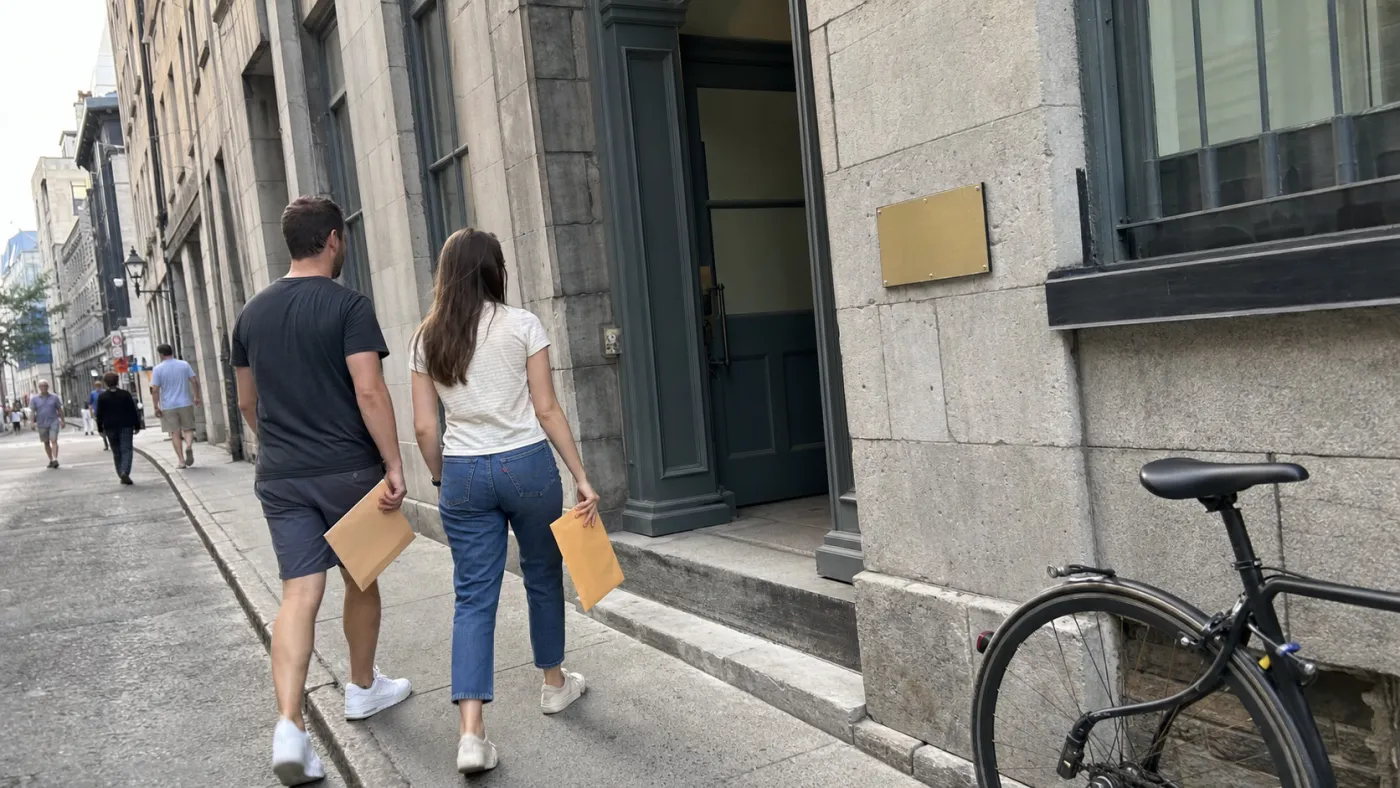
These are only high-level examples. If you live in another province or territory, check the law that applies there. If you own property in more than one place or expect to move, ask a lawyer which law and forum clauses are appropriate.
Meeting the signing rules is not the same as creating a strong agreement
Couples often focus on the final signature page. The process before signing may be just as important.
A witnessed Ontario agreement can still face a challenge if one partner did not disclose significant property or debt. A witnessed BC agreement can still be reviewed under section 93. An Alberta document signed at home without the required acknowledgements may not meet section 38. A handwritten Quebec “prenup” is not a substitute for the required notarial act.
Formalities are the floor, not a complete quality test.
Six risks of a completely DIY prenup
1. Using an American template
Search results are full of US forms that refer to states, community property, alimony, or statutes that do not apply in Canada. Changing “state” to “province” does not make the legal structure Canadian.
Use a document designed for your province and agreement type. In Ontario, the usual legal term is marriage contract. Quebec uses a distinct civil-law and notarial framework.
2. Treating disclosure as a sentence instead of evidence
“We have disclosed everything” is not the same as actually exchanging useful information.
Each partner should prepare a dated list of assets, liabilities, income, and important financial interests. Supporting records may include account statements, mortgage balances, property information, business records, pension information, and debt statements.
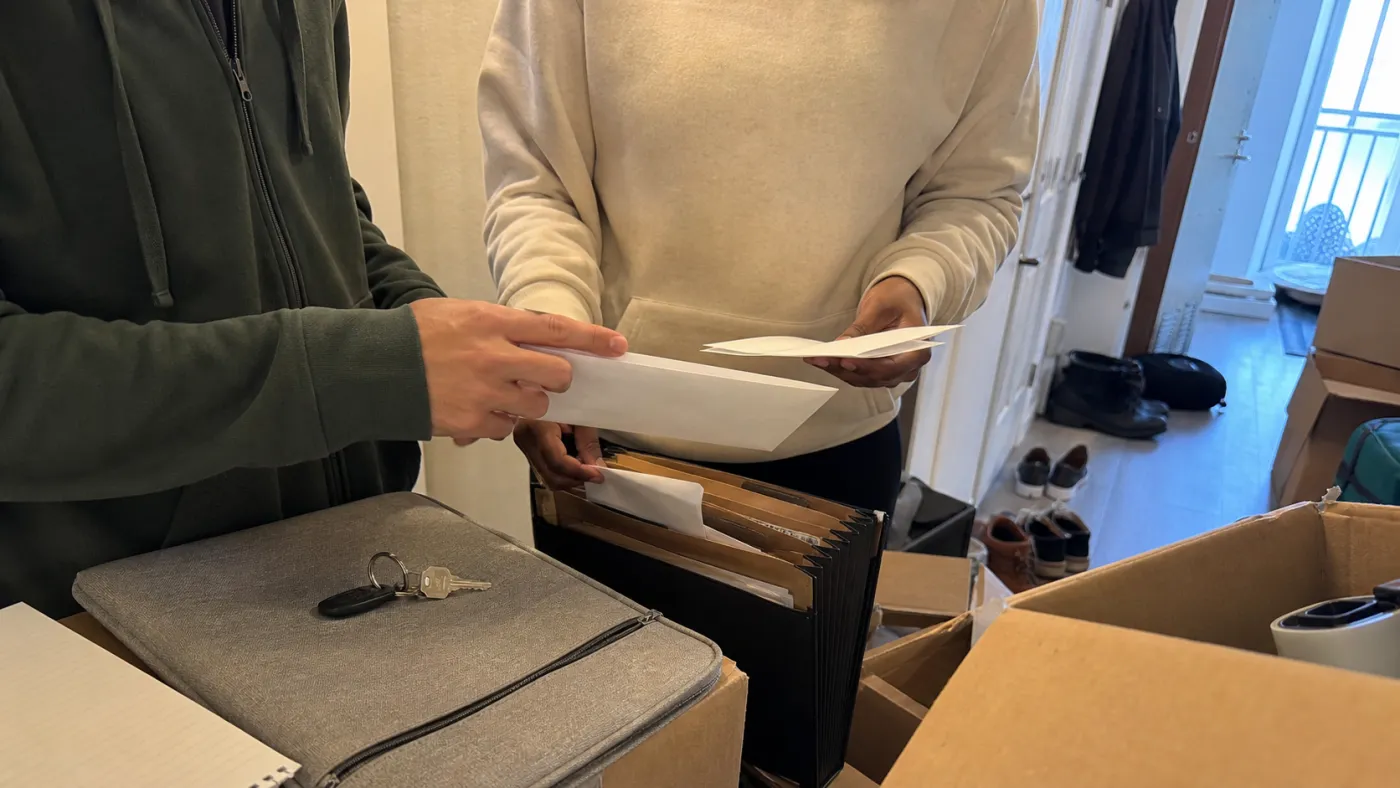
If you have a business, private-company shares, a pension, stock options, trusts, or overseas property, valuation and disclosure can become more complicated.
3. Writing vague property rules
“The house remains Alex's” leaves many unanswered questions. What happens to mortgage principal paid with shared funds? Renovations? A refinance? Rental income? Sale proceeds? A replacement property? The family home rules in the applicable province?
The same problem appears with businesses and investments. An agreement should distinguish the asset owned on signing from future contributions, income, growth, and replacement assets where appropriate.
4. Trying to decide child support or future parenting
A prenup is primarily a financial agreement. It is not a reliable place to predetermine parenting arrangements or eliminate a child's right to support. Courts decide parenting based on the child's best interests, and child support rules cannot simply be signed away by the parents.
See what cannot be included in a Canadian prenup before adding personal conduct, parenting, or penalty clauses.
5. One partner controlling the whole process
If one partner chooses the template, writes every term, withholds financial details, and presents the document shortly before the wedding, the process can look pressured and one-sided.
Start early. Exchange drafts. Keep a record of revisions. Give each person time to think. Each partner should be free to ask questions and obtain separate advice.
6. Assuming notarization fixes everything
Outside Quebec, notarization is not a universal cure for a weak agreement. A notary or witness confirming a signature does not automatically prove complete disclosure, informed consent, clear drafting, or fair negotiation.
Quebec is different because the Civil Code requires the marriage contract itself to be completed by notarial act. Elsewhere, confirm the signing and advice requirements for your province rather than adding a notary stamp and assuming the job is done.
A safer low-cost workflow
You do not necessarily have to choose between an unreviewed free form and paying a lawyer to build every sentence from a blank page.
For a straightforward, cooperative relationship, a hybrid workflow can look like this:
- Agree on the goals. Decide which assets, debts, support questions, and future events the agreement needs to address.
- Exchange financial disclosure. Build dated schedules and gather supporting records before finalizing clauses.
- Create a province-aware first draft. Use a guided Canadian service or have one lawyer prepare it.
- Review separately. Each partner reads the full draft and disclosure without the other person directing the review.
- Revise early. Resolve unclear or disputed points while there is still time before the wedding.
- Get independent legal advice. Each partner speaks with a different lawyer. In Quebec, work with a notary for the marriage contract. Alberta property agreements have the specific section 38 process noted above.
- Sign the final version properly. Include every schedule and attachment, use the required witnesses or acknowledgements, and keep complete copies.
This approach can reduce time spent paying a professional to collect basic facts while preserving legal help for the work that requires judgment.
Prenuply helps Canadian couples organize their information and generate a customized agreement template. The document is a starting point for review, not a replacement for independent legal advice.
When should you skip DIY drafting and start with a lawyer?
Start with a family lawyer or Quebec notary if any of these apply:
- you and your partner already disagree about major terms
- one person is reluctant, under pressure, or has limited access to financial information
- there is a large difference in wealth or income
- either partner owns a corporation, partnership, professional practice, farm, trust interest, or complex real estate
- there are children from an earlier relationship or estate-planning concerns
- the agreement includes a major spousal support waiver
- assets or debts are located outside Canada
- one partner may not understand the language of the agreement
- the wedding is close
- you are unsure which province's law applies
The cost of fixing a poor draft can erase the savings of writing it yourself. For a fuller comparison, read where to get a prenup in Canada and Prenuply's prenup cost guide.
DIY prenup checklist before lawyer review
Use this checklist to make the professional review more efficient:
- We started well before the wedding date
- We identified the province or territory that applies
- We used Canadian, province-aware terms
- Both partners listed assets, debts, income, and relevant future interests
- Supporting financial records are current
- The agreement explains separate property and future growth
- It addresses contributions to a home or business
- It deals with debt and tax consequences where relevant
- It does not try to predetermine parenting or waive child support
- Both partners had meaningful input into the draft
- Each partner has time and freedom to get separate advice
- The final signing will meet provincial requirements
- All schedules and attachments will be included in every signed copy
Frequently asked questions
Is a homemade prenup legally binding in Canada?
It can be in some provinces if it meets the applicable legal requirements, but “homemade” is not a guarantee of enforceability. Courts may examine disclosure, understanding, pressure, contract-law concerns, and province-specific fairness rules. Alberta and Quebec have important formal requirements that make a fully lawyer-free or notary-free route especially problematic.
Can we use one lawyer for both partners?
One lawyer should not provide independent legal advice to both partners about the same agreement. A drafting lawyer may prepare the document for one client, while the other partner obtains advice from a different lawyer. Alberta's section 38 expressly requires the acknowledgement before a lawyer other than the other party's lawyer.
Does a prenup need to be notarized in Canada?
There is no single Canada-wide notarization rule. Ontario legislation calls for writing, signatures, and witnessing. BC section 93 refers to witnessed signatures for property agreements. Alberta uses separate-lawyer acknowledgements for section 37 property agreements. Quebec requires a marriage contract by notarial act.
Can an online prenup be valid?
An online tool can create a useful first draft. The reliability of the final agreement depends on its substance and process, including province-aware terms, full disclosure, voluntary negotiation, separate advice where required or advisable, and proper signing. Read is an online prenup legal in Canada? for more detail.
Can we write the agreement now and get lawyers later?
You can organize terms and prepare a draft before legal review. Do not sign a supposed final version first and expect later advice to repair the earlier process. Give each lawyer time to recommend changes before the final signing.
What if we are already married?
Depending on the province, married spouses can enter a marriage contract or postnuptial agreement. The process and legal considerations are similar, but get province-specific advice rather than simply changing the date on a prenup template.
Bottom line
You can do much of the preparation yourself: discuss goals, list finances, compare options, and create a structured first draft.
The risky shortcut is assuming that a downloaded form plus two signatures equals a strong Canadian prenup. Provincial rules matter. Disclosure matters. Clear drafting matters. Separate legal advice can matter, and in Alberta's property-agreement process and Quebec's marriage-contract process, the formal professional role is especially important.
Use DIY work to make the process more organized and affordable, not to skip the safeguards that give the agreement a better chance of doing its job.