
Financial disclosure is the part of prenup planning where each partner gives the other a clear picture of their finances before signing. It is not just paperwork. It is how both people understand what rights they may be keeping, changing, or giving up.
For Canadian couples, disclosure usually means listing important assets, debts, income, business interests, real estate, pensions, investments, and any other financial information that could affect the agreement. The exact process depends on your province and your lawyer's advice, but the principle is consistent: a prenup is stronger when both partners know what they are agreeing to.
This guide explains what to list, what documents to gather, and why disclosure matters before lawyer review.
Why financial disclosure matters in a prenup
A prenuptial agreement, often called a marriage contract or domestic contract in Canadian law, is based on informed consent. If one partner does not know about a significant asset, debt, liability, income stream, or business interest, it becomes harder to say that partner made an informed choice.
Disclosure is also an enforceability issue. In Ontario, the Family Law Act allows a court to set aside a domestic contract if a party failed to disclose significant assets, debts, or other liabilities existing when the contract was made. British Columbia takes a similar approach. Under section 93 of the BC Family Law Act, a court may set aside or replace a property agreement if a spouse failed to disclose significant property, debts, or other information relevant to the negotiation.
That does not mean every minor omission automatically invalidates an agreement. It does mean disclosure should be treated as a core planning step, not an afterthought.
If you are still deciding where this step fits in the wider process, see our Canadian prenup checklist and our guide to whether prenups are enforceable in Canada.
What should you disclose?
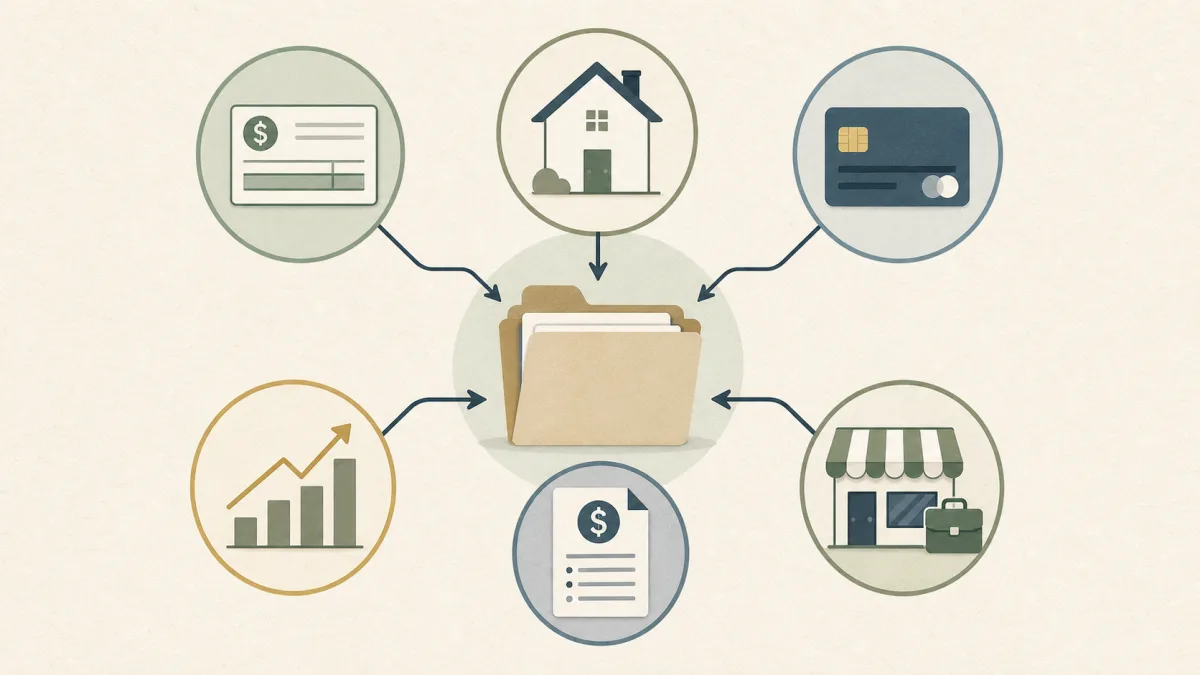
There is no single universal disclosure package for every couple. A lawyer may ask for more or less detail depending on your province, assets, timing, and the terms you want in the agreement. As a practical starting point, each partner should be prepared to disclose the following categories.
Income and employment
List your current income sources, including salary, bonuses, commissions, self-employment income, rental income, dividends, trust distributions, and recurring family support. If your income changes from year to year, note the pattern instead of only listing the most recent number.
Useful documents may include recent pay stubs, employment contracts, T4 slips, notices of assessment, and the last two or three tax returns.
Bank accounts, investments, and registered accounts
Include chequing and savings accounts, high-interest savings accounts, GICs, brokerage accounts, RRSPs, TFSAs, RESPs where relevant, stock options, RSUs, employee share plans, and private investments.
If the prenup is meant to protect pre-marital assets, values matter. A lawyer may want statements around the date of the agreement, the date of marriage, or another agreed date, depending on the province and drafting strategy.
Real estate
Disclose homes, condos, cottages, rental properties, vacant land, pre-construction units, foreign property, and beneficial interests in property held by a family member, corporation, or trust.
For each property, list the owner, address or description, estimated value, mortgage balance, secured lines of credit, purchase date, and whether either partner contributed to the purchase, renovations, mortgage, taxes, or maintenance.
The family home deserves extra care. In some provinces, special rules apply to the matrimonial home or family residence. A prenup can still be useful, but your lawyer should review the local rules before you assume a home can be fully excluded.
Debts and liabilities
Do not only disclose assets. List credit cards, student loans, tax debt, car loans, personal loans, business guarantees, lines of credit, mortgages, family loans, and contingent liabilities.
Contingent liabilities are obligations that may become real later, such as a personal guarantee on a business loan, a pending tax issue, or responsibility under a lease. These can be easy to overlook, but they matter because a prenup often allocates responsibility for debts.
Business interests and professional practices
If either partner owns a business, shares in a corporation, partnership interests, a professional practice, or a side business, disclose it early. Include ownership percentages, shareholder loans, corporate debt guarantees, recent financial statements, and whether the business depends heavily on one person's personal labour.
Business valuation can be complex. A small company with modest cash in the bank may still have meaningful goodwill, equipment, recurring revenue, contracts, or tax consequences. For more detail, see our guide to prenups for entrepreneurs in Canada.
Pensions, benefits, and insurance
Pensions and benefits can be valuable even when they do not feel like ordinary assets. Disclose workplace pensions, locked-in retirement accounts, deferred compensation, health benefits, life insurance policies with cash value, disability policies, and named beneficiaries where relevant.
If either partner works in government, education, health care, a unionized workplace, or a large corporation, pension rights may need separate attention.
Inheritances, gifts, trusts, and family wealth
If you have already received an inheritance or significant family gift, disclose it. If you expect a future inheritance, tell your lawyer even if you do not know the amount. Future inheritances are uncertain, so they are usually handled differently from property already owned, but they can still affect the agreement's drafting.
If a parent has helped with a down payment, contributed to a business, or put assets in a trust, gather the documents that show whether the money was a gift, loan, investment, or something else. Our article on protecting inheritance with a prenup covers this topic in more depth.
Digital assets and crypto
Crypto, exchange accounts, hardware wallets, domain names, creator revenue accounts, online businesses, and digital collectibles should be disclosed if they have meaningful value. Because values can change quickly, record the date and method used to estimate value.
For crypto-specific planning, see our guide to crypto in a Canadian prenup.
Documents to collect before lawyer review
You do not need to make the package perfect before you start. The goal is to give your lawyer enough information to spot gaps, ask better questions, and draft terms that match your real financial life.
Start with:
- A simple net worth summary for each partner
- Recent statements for bank, investment, RRSP, TFSA, and pension accounts
- Recent pay stubs and employment agreements
- The last two or three tax returns and notices of assessment
- Property tax bills, mortgage statements, purchase documents, and appraisals if available
- Credit card, loan, line of credit, and student loan statements
- Business financial statements, shareholder agreements, partnership agreements, and corporate debt documents
- Insurance policy summaries where cash value or beneficiaries matter
- Trust, inheritance, family loan, or gift documents
- A list of assets or debts outside Canada
The strongest package is usually organized by category, dated, and easy to update. If something is missing, add a note that says what is missing and when you expect to have it. Silence is riskier than an honest gap.

Province-specific notes Canadian couples should know
Family law is provincial and territorial, so your disclosure process should be reviewed by a lawyer in the province that applies to your agreement.
Ontario
Ontario marriage contracts and cohabitation agreements are domestic contracts. The key disclosure risk is significant assets, debts, and liabilities existing when the contract was made. If you are contracting around property division, spousal support, or a home bought before marriage, disclose the facts that make those terms meaningful.
If a home is involved, read our Ontario guide on protecting a house bought before marriage.
British Columbia
BC's Family Law Act expressly refers to agreements about property and debt. Section 93 includes non-disclosure of significant property, debts, or other information relevant to negotiation as a possible basis for setting aside an agreement.
That makes disclosure especially important when the agreement excludes property, values a business differently, allocates debt, or treats family property unequally.
Alberta
Alberta's Family Property Act governs property division for married spouses and adult interdependent partners. Alberta agreements have formal requirements that should be handled carefully with independent legal advice. If Alberta law applies, do not assume a generic online template or informal signing process is enough.
Quebec
Quebec uses a different legal framework. The Chambre des notaires du Quebec explains that marriage and civil union contracts must be notarized to be valid, and Educaloi explains that spouses and future spouses can use a marriage contract to choose a matrimonial regime.
If you are marrying in Quebec or have strong Quebec ties, speak with a Quebec notary or lawyer before relying on a prenup process designed for another province.
How much detail is enough?
Disclosure should be detailed enough that the other partner and their lawyer can understand the financial picture. That usually means listing the asset or debt, who owns it, the approximate value or balance, the date of that value, and the supporting document.
For example, "RRSP, $82,000, statement dated May 31, 2026" is more useful than "retirement savings." "Personal guarantee on corporation operating line, maximum exposure $100,000" is more useful than "business debt."
When values are uncertain, say so. Business interests, private company shares, pensions, stock options, real estate, and foreign assets may need estimates or professional valuation. The goal is not to pretend every number is exact. The goal is to show that both partners understood the important financial facts before signing.
Common disclosure mistakes
The most common mistake is treating disclosure as a moral question instead of a practical record. You may trust each other completely and still need the information in writing.
Other mistakes include:
- Listing assets but not debts
- Forgetting contingent liabilities, such as guarantees or tax issues
- Using old values without dates
- Leaving out business interests because the business is "not profitable yet"
- Failing to explain whether family money was a loan or gift
- Assuming a partner already knows enough because you have discussed finances casually
- Waiting until the week before the wedding
- Signing before each person has had independent legal advice
Timing matters. Last-minute disclosure can create pressure and make lawyer review harder. If your wedding date is close, talk to a lawyer before deciding whether to rush, narrow the agreement, or postpone signing.
How Prenuply fits into the process
Prenuply helps Canadian couples create a structured prenup draft and organize the information a lawyer will need to review it. It is designed to make the starting point clearer and more affordable, especially when couples know they need a prenup but are not sure what questions to answer first.
Prenuply is not a substitute for legal advice. A lawyer can review disclosure, explain provincial rules, flag terms that may not work, and advise each partner independently. If you are comparing options, read our guide to online prenups in Canada and our article on prenup costs in Canada.
When you are ready to start, you can create your prenup draft with Prenuply and bring a more organized package to lawyer review.
FAQ
Do both partners need to disclose everything?
Both partners should disclose significant financial information relevant to the agreement. That includes assets, debts, income, liabilities, business interests, and other facts that could affect the terms. Your lawyer can advise what is significant in your situation.
Can we waive financial disclosure?
Some couples ask whether they can waive disclosure because they trust each other. That is risky. Even if an agreement includes waiver language, a court may still look at whether each person understood the nature and consequences of the agreement and whether important financial information was withheld. Get legal advice before relying on a waiver.
Do I need exact values for every asset?
Not always, but you should avoid vague guesses for important assets. Use recent statements where possible. For real estate, businesses, pensions, private investments, and foreign assets, ask your lawyer whether an estimate is enough or a valuation is needed.
What if I discover a missing asset after signing?
Tell your lawyer. The answer depends on the asset, why it was missed, whether it was significant, and whether the agreement can be amended. Do not ignore it and hope it never matters.
Is financial disclosure only for wealthy couples?
No. Disclosure matters whenever a prenup changes rights around property, debt, support, or future financial responsibilities. A couple with student loans, a condo, a small business, or help from parents may need careful disclosure even if they do not consider themselves wealthy.
Bottom line
Financial disclosure is not just a box to check. It is the factual foundation for a prenup. The clearer the disclosure, the easier it is for both partners to understand the agreement, for lawyers to review it, and for the final document to reflect the couple's real financial life.
Prenuply AI Inc. is not a law firm and does not provide legal services or legal advice. Prenuply provides technology tools and educational information to help couples prepare a draft agreement for review with independent legal professionals.